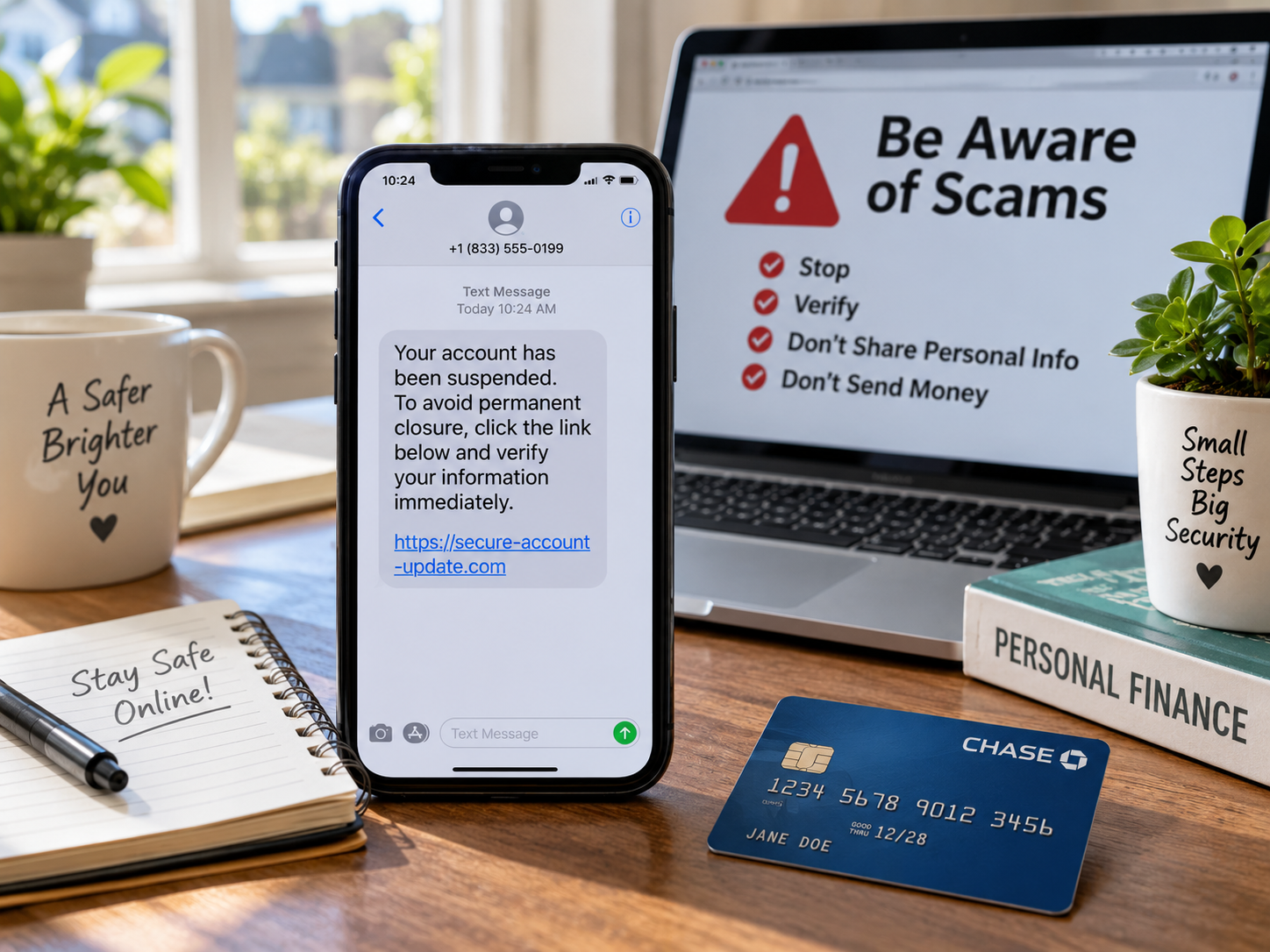
Scams can show up almost anywhere. You might receive a phone call, text message, email, social media message, or even a message that appears to come from a company or government agency.
The good news is that many scams have warning signs. Learning how to spot a scam before sending money or sharing personal information can help you avoid a costly mistake.
1. Be Careful When Someone Creates Urgency
One of the biggest warning signs is pressure to act immediately.
A caller might tell you that your account will be closed today, that you owe money, or that you will lose an opportunity if you do not pay right away.
Take a moment before doing anything.
A legitimate organization may give you time to verify information. If someone is trying to make you panic, slow down and check the situation independently.
2. Don’t Trust a Message Just Because It Looks Official
Scammers can make emails, websites, text messages, and caller information look convincing.
A message may use a company logo, official-looking language, or the name of a real organization.
Instead of clicking the link or calling the number provided in the message, find the organization’s official website yourself and use the contact information listed there.
This gives you a safer way to verify whether the message is real.
3. Never Share Sensitive Information Without Checking
Be careful if someone unexpectedly asks for information such as:
- Social Security information
- Bank account details
- Credit card information
- Passwords
- Verification codes
- Other personal information
Especially be cautious when the request comes through an unexpected phone call, text, or email.
If you are unsure, stop the conversation and contact the organization through an official channel.
4. Watch Out for Unusual Payment Requests
A major warning sign is when someone insists that you pay using an unusual method.
Scammers may request gift cards, wire transfers, cryptocurrency, prepaid cards, or certain payment apps because these payments can be difficult to recover.
If someone says you must use one specific payment method immediately, take that as a reason to stop and verify the request.
5. Be Careful With Unexpected Calls
A scammer may pretend to be from a bank, government agency, delivery company, utility provider, or another business you recognize.
Even if the caller knows some information about you, that does not automatically prove the call is legitimate.
You can end the call and contact the organization using a phone number from its official website, statement, card, or another trusted source.
6. Don’t Click Suspicious Links
Unexpected links can take you to fake websites designed to collect your information.
Before clicking, ask yourself:
Was I expecting this message?
If not, don’t rush.
Instead, open your browser and visit the company’s official website directly.
7. Be Skeptical of Deals That Sound Too Good
Be careful with messages promising easy money, expensive prizes, guaranteed returns, or rewards you never expected.
A scammer may first create excitement and then ask you to pay a fee or provide personal information.
If you never entered a contest, for example, be suspicious of a message saying you won a prize.
8. Don’t Let Fear Make the Decision for You
Some scams use fear instead of excitement.
You may be told that you will be arrested, lose your benefits, have your account closed, or face another serious problem unless you pay immediately.
Don’t make a financial decision while you’re scared or under pressure.
Stop, take a breath, and verify the claim independently.
9. Ask Someone You Trust
If a message or phone call feels strange, talk to someone you trust before sending money or information.
A second person may notice something you missed.
There is nothing wrong with taking a few minutes to verify a suspicious request.
10. What to Do If You Think It’s a Scam
If you realize that a message or call is suspicious, don’t continue the conversation.
Don’t send money or additional information.
If you already shared sensitive information or sent money, take action as soon as possible. Contact the relevant bank, payment provider, or organization and explain what happened.
You can also report suspected fraud through the appropriate government or consumer-protection channels.
A Simple Rule to Remember
When something feels urgent, unexpected, or unusually good, slow down before you act.
Verify who contacted you, use official contact information, and never let someone pressure you into sending money or personal information.
Taking a few extra minutes to check can help protect your money and your personal information.
Final Thoughts
Knowing how to spot a scam is an important everyday skill. Scammers can use phone calls, texts, emails, websites, and social media, so staying cautious is useful wherever you communicate or manage money.
When in doubt, stop, verify, and think before you pay.